Easter is a Christian holiday that marks Christ’s resurrection and the victory of faith and life over death.
What animals are associated with Easter? Rabbits and chickens are directly related to Easter. While sheep, doves, and fish are related to Christian tradition overall.
Why are rabbits and eggs part of Easter?
Are there any of you who do not think of a happy bunny and colorful eggs when you hear the word Easter?
Where did that come from?
The most common interpretation is this story.
The Anglo-Saxon myth of the spring goddess Eostre
Ostara, or Eostre or Eastre, is the Germanic Goddess of the spring and dawn. In Old English, it is Ēastre.
As the legend says, the hare was the sacred animal of Ostara.
And that wasn’t the end.
There is a story about the little girl. Here it goes.
A little girl discovered a nearly dead bird. And she prayed to Eostra for help.
Eostra appeared, crossing a rainbow bridge with the snow melting at her feet.
She noticed the bird’s severe injuries. She transformed it into a hare and told the little girl that it would return annually bearing rainbow-colored eggs.
This beautiful story explains the connection between Easter, bunnies, and colorful eggs. It is a part of folk tradition, and like all folk traditions, this legend was passed down from generation to generation.
However, there are no written traces from that time. Because of this, many doubt that it is true despite the fact it seems believable.
Modern Interpretations of the Easter Bunny

Today, we experience the Easter Bunny as a symbol associated with fun, gift-giving, and the joy of spring.
Keeping that in mind, let us further explore what animals are associated with Easter.
Chickens and Easter
Imagine Easter as a big birthday party for spring.
5 inches
Just like birthdays celebrate new beginnings and growth, Easter celebrates Jesus’s return to life. At the same time, nature is awakening.
This is why many things about Easter symbolize new life.
Why do Chickens come into the story?
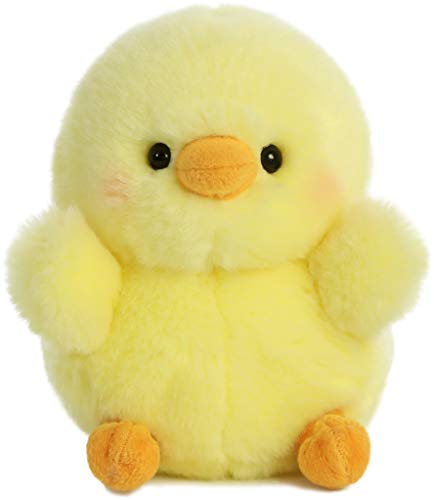
They lay eggs, which hatch into fluffy, adorable chicks.
This represents the new beginnings that Easter celebrates. Plus, baby chicks are just plain cute, and who doesn’t love seeing them peeking out of baskets on Easter morning?
But wait, chickens don’t lay colorful eggs, right?

12 pcs
Of course not. It’s a fun thought, but not what chickens do.
According to the story, Mary Magdalene boldly presented herself to Emperor Tiberius Caesar with an egg. She exclaimed. “Christ is risen!” Skeptically, Caesar mocked her and said that Jesus Christ’s resurrection was as impossible as the egg in Mary’s hand turning red. However, the egg miraculously turned vivid red as he spoke.
Chickens’ role in producing eggs links them to life, renewal, and rebirth.
The increased focus on eggs during Easter also draws attention to chickens.
What does the Easter lamb represent?

In the Jewish tradition, the central ritual of the Passover celebration is the sacrifice of a lamb.
Symbol of sacrifice
The lamb has historically held a central place in Easter feasts, particularly in Mediterranean countries, as an animal directly associated with the holiday.
This tradition reflects the connection between the Passover lamb and Jesus’ ultimate sacrifice. It reminds Christians of the profound significance of Jesus’ death and resurrection.
The practice commemorates the Israelites’ dramatic escape from slavery in Egypt. And this story is powerfully recounted in the book of Exodus. Here, the lamb symbolizes God’s protective embrace and the deliverance of His people.
Furthermore, early Christians embraced this symbolism of the lamb. They saw it as connected to Jesus’ ultimate sacrifice, who took away the world’s sins. They referred to him as the “Lamb of God.”
For early Christians, the lamb emerged as a powerful symbol. It emphasizes Jesus’ innocence, purity, and selfless willingness to sacrifice for humanity.
Sheep are used throughout the Bible symbolically to refer to God’s people.
Innocence and Purity
Sheep have long been associated with innocence and purity due to their gentle nature and white wool. This symbolism aligns perfectly with Jesus’ portrayal as the sinless “Lamb of God.”

30 inch
Sacrifice and Renewal
Historically and symbolically, the lamb’s sacrificial nature connects to the core theme of Easter. Jesus’ death on the cross and subsequent resurrection. It represents the sacrifice of one life for the renewal and salvation of many.
Gentleness and Peace
The image of a shepherd tending his sheep evokes gentleness, care, and peace. This resonates with Christian teachings about Jesus as the Good Shepherd. He cares for his flock and offers peace to the world.
Modern Significance
Understanding the historical and symbolic connections between sheep and Easter makes us appreciate this crucial religious holiday.
The tradition of eating lamb for Easter has declined in some places. But the symbolic connection between sheep and the holiday remains strong.
Lamb imagery reminds Christians of the core message of Easter and Jesus’ sacrifice.
What animals are associated with Easter and Christianity as such?
Dove
The dove is an extraordinary bird that has meaning in many old and new stories. It’s like a sign that conveys love, peace, and messages from above. Let’s see how the dove became so important.
A long time ago, before the advent of cars and phones, people regarded doves as extraordinary birds. They believed doves were associated with love and brought many blessings. People also viewed them as messengers from the gods or the sky.
Dove as a sign of hope
One of the biggest stories about a dove is from the Bible. It’s about Noah’s Ark. After a big flood, a dove returned to Noah with an olive green leaf, showing that the water was going away and things would be okay again.
This story made people think of doves as signs of hope and starting fresh.
In another part of the Bible, when Jesus was being baptized, a dove came down to him.
Plush Playset, 5 Pieces
This showed that God was with Jesus. So, doves started to mean something exceptional in Christianity, like being close to God and feeling His love.
Long ago, in the early days of being Christian, people would draw doves to show peace and hope.
Symbol of peace
Over time, doves continued to be symbols of peace. When people wanted to show they wanted peace over fighting, they would use the image of a dove.
Even now, doves are symbols of the Holy Spirit in churches and special ceremonies. They symbolize God’s presence and love.
So, it is like a message that has flown through time, telling us about love, peace, and new beginnings.
Annunciation
The dove became primarily associated with the Virgin Mary’s Annunciation, representing the Holy Spirit’s descent and her conception of Jesus. It also appeared in depictions of Pentecost, symbolizing the Holy Spirit’s descent upon the apostles.
The dove continues to inspire and uplift. It’s delicate form and gentle reminder of the hope for renewal and peace. And above the divine presence that transcends time and cultural boundaries.
Are these all animals that are associated with Easter? There is one more. There is another closely related to Christianity.
Fish
Although not as widely used as the animals mentioned above, fish hold symbolic meaning in some Christian traditions. Early Christians used the Greek word for fish (“Ichthys”) as a secret symbol, and it can represent abundance, life, and baptism, connecting to Easter’s themes of renewal and spiritual life.
The fish symbol is closely linked to the Greek word “ΙΧΘΥΣ” (Ichthys), which early Christians used as an acronym. Each letter in “ΙΧΘΥΣ” stands for words that mean “Jesus Christ, God’s Son, Savior” (Ιησούς Χριστός, Θεοῦ Υἱός, Σωτήρ). This acronym served as a covert sign among Christians to identify each other during periods of persecution.
The Sign of the Fish
Early Christians used the fish symbol as a secret sign to mark meeting places. Also, to identify with each other. It was in an era when Christianity was not dominant and often faced persecution. The simplicity of the fish symbol, resembling two intersecting arcs, allowed it to be quickly drawn and recognized while maintaining discretion.
Eucharistic Symbolism
Early Christian art and literature frequently used the fish as a symbol for the Eucharist, reflecting the communal sharing of bread and fish in early Christian meals and gatherings. This symbolism stems from the accounts of Jesus breaking bread and sharing fish with his disciples, both during his ministry and after his resurrection

The first book in the New York Times bestselling Rainbow Fish series.
Baptism and Water
Water is a central element in Christian rituals, particularly baptism. It signifies purification, rebirth, and initiation into the Christian faith. The fish, being an aquatic creature, naturally aligns with the symbolism of water, representing a believer’s immersion into the Christian community and their new life in Christ.
Over time, the fish symbol evolved from a covert sign among early Christians to a widely recognized symbol of Christianity. It reflects the faith’s foundational beliefs, the historical context of persecution, and the teachings and miracles of Jesus. Today, we see fish symbols on bumper stickers, jewelry, and various forms of Christian art, continuing to represent the Christian faith and its adherents’ connection to the teachings of Jesus
Conclusion
So, we’ve gone on a little adventure learning about animals associated with Easter and the stories in Christianity.
Each animal – the bunny, chicken, sheep, dove, and fish carries a unique message and story. Kind of like messengers of hope, love, and new beginnings.
All these animals together make Easter, and the stories we hear make it more interesting and meaningful. They teach us joy, love, kindness, bravery, and the thrill of new starts.
So, next time you see one of these animals or celebrate Easter, think about the incredible stories and messages they bring to our lives.